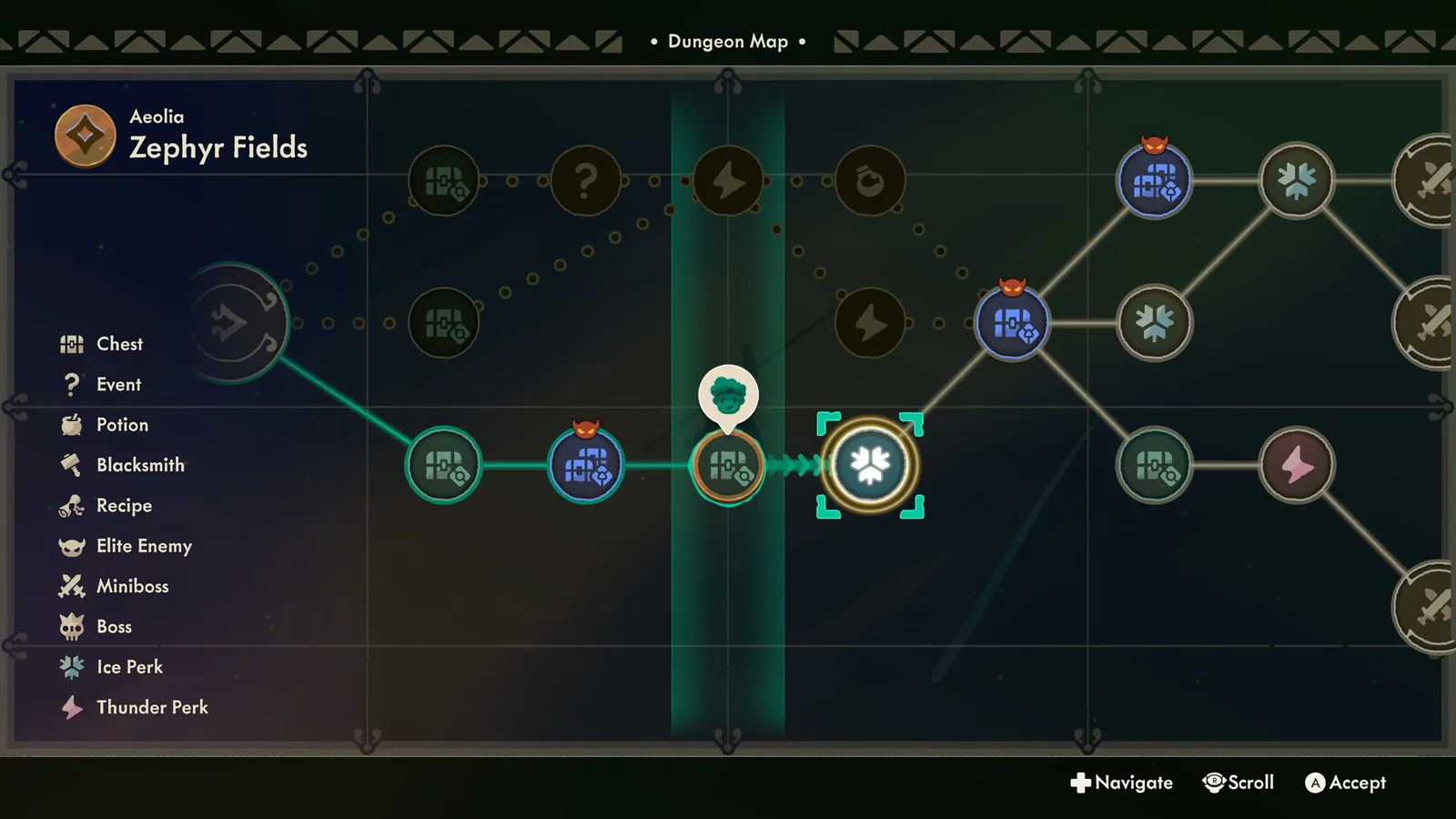
The dungeon map is a routing puzzle: official map screens label node types — Chest, Event, Potion, Blacksmith, Recipe, Elite Enemy, Miniboss, Boss, plus perk nodes like Ice Perk and Thunder Perk — so decide before you move whether this run is a money run (stack blue and purple chests) or a power run (stack perk nodes). Named bosses in official screenshots include Senda, Orphis the Orb Keeper, Thalaam and The Herald.
Reading the map like a runner
Long-form 1.0 playthroughs narrate exactly this decision loop: “I’m going to take that upper route… because I want cash”, or skipping a chest because a perk node fits the build better. Money runs deliberately chain blue and purple chests — the mechanic breakdown’s advice is that the items worth selling are not in the common tiers — while power runs detour for the perk color the build is missing. Combat capability is the thing you can safely underspend on a money run; bag space is not.
Maps are not fully procedural: the same breakdown notes areas are static layouts with varying enemy spawns, which means the throw positions and tight corridors you learn in each room stay learnable.
Named bosses you will meet
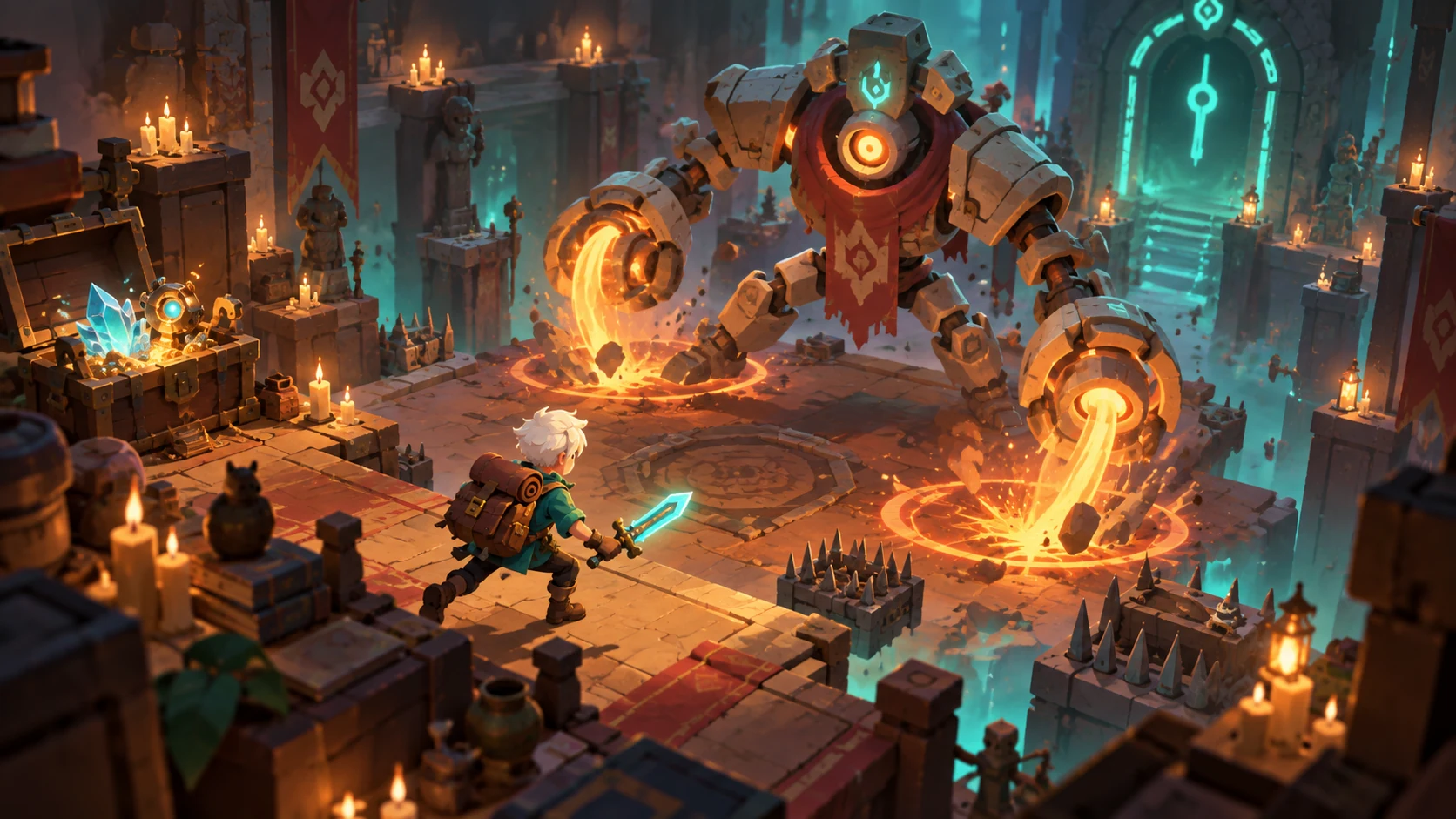
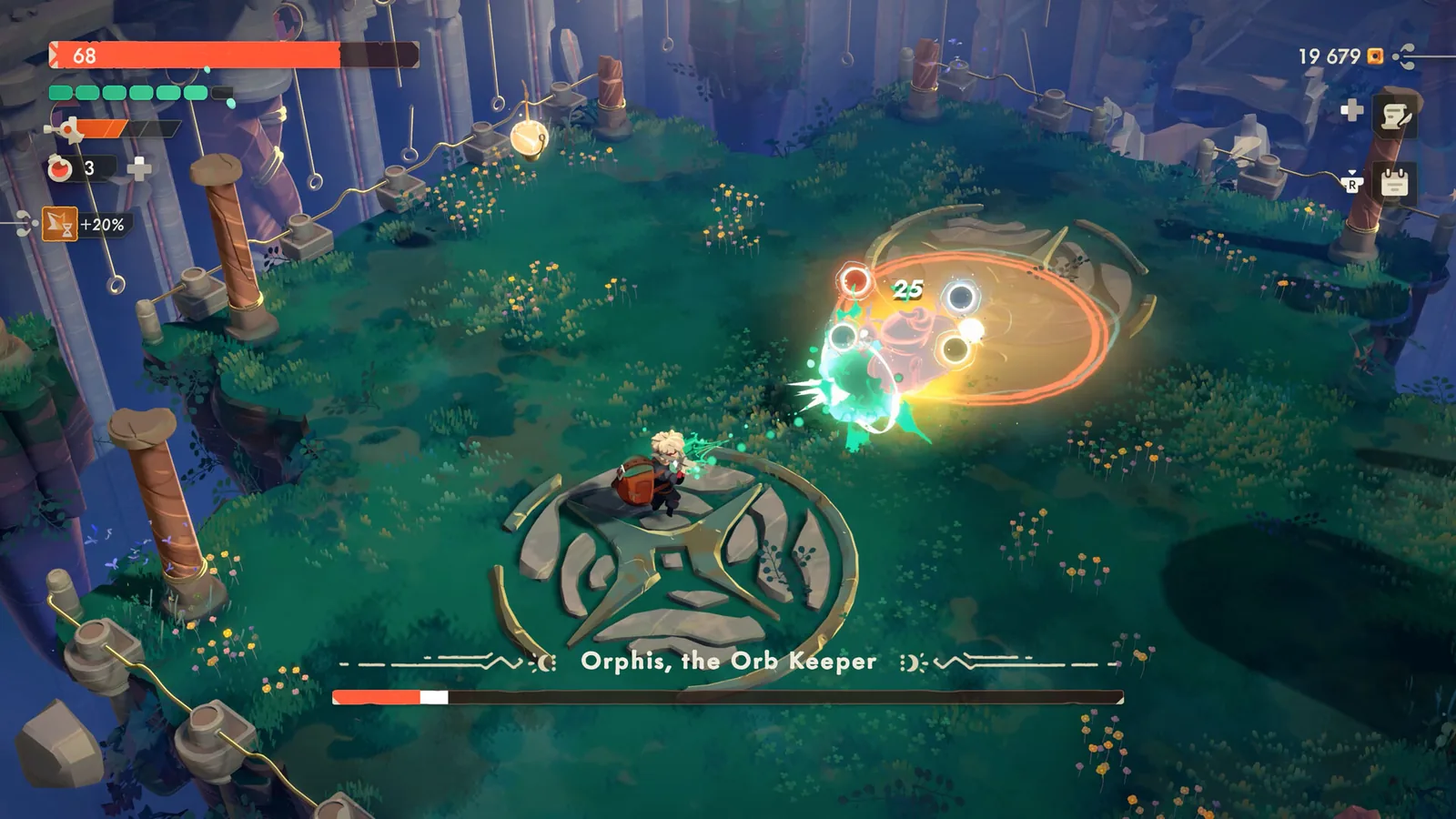
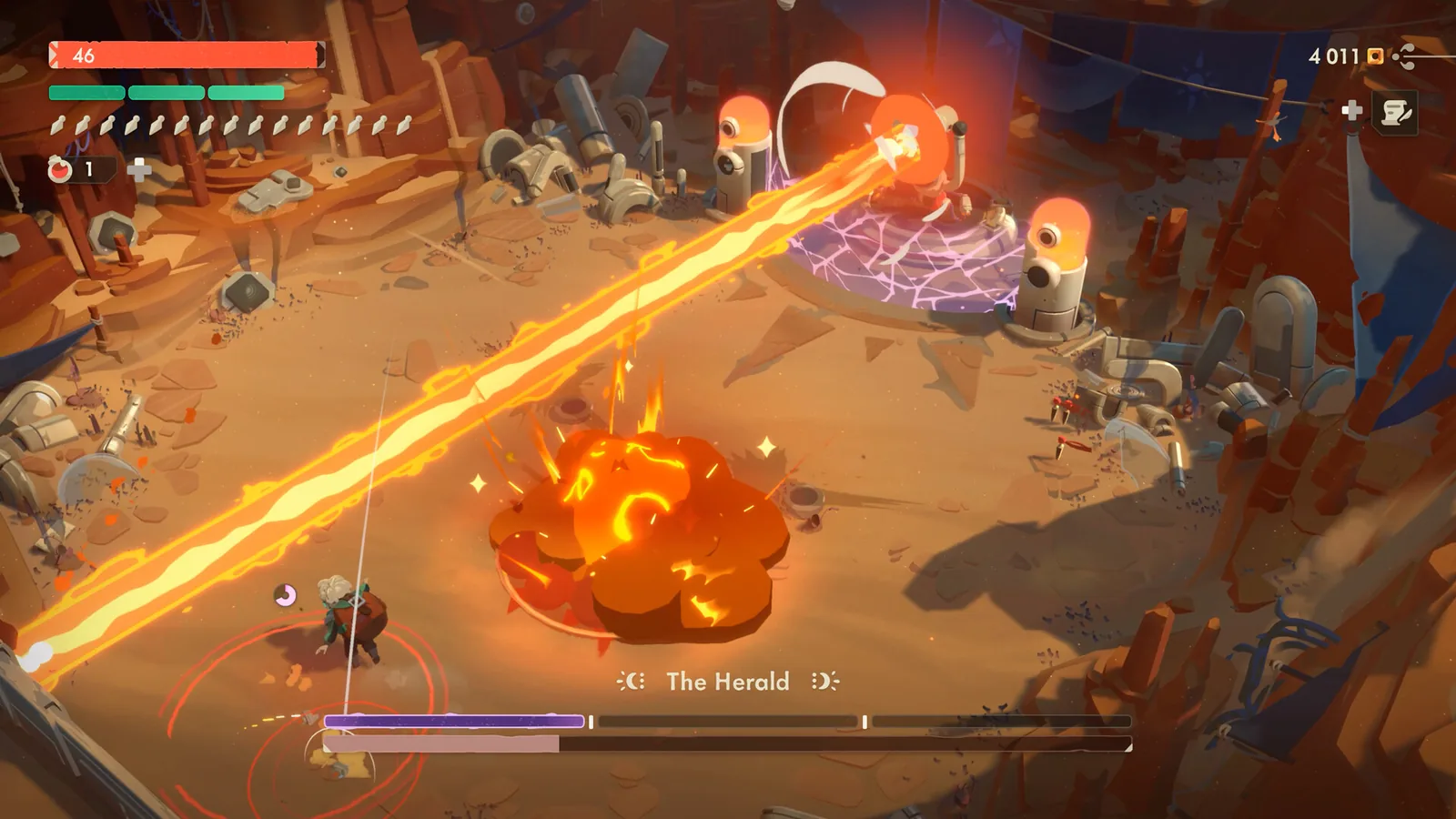
Official store screenshots put names on the arena fights: Senda on a floating garden island ringed by orbiting blades, Orphis, the Orb Keeper in a green meadow arena, Thalaam in a candle-lit circle throwing fire projectiles and The Herald firing a sweeping fire beam across a desert scrapyard. Different arenas, same grammar: telegraphs first, punishment windows second.
Four mechanics that decide arena fights
- Rupture throws. Below roughly half health enemies turn purple (ruptured); a backpack bash hurls them, and a throw that travels across open floor deals heavy impact damage while a throw into a wall does almost none. Save throws for rooms with space.
- Movement beats most attacks. Footage shows regular enemies whiffing entirely against a moving target — keep strafing even mid-combo.
- Heal on your terms. Playthroughs heal up immediately before boss rooms rather than mid-fight; potions bought at node shops exist for exactly this.
- Cash out before you push. A loot route that leaves the bag too full to take the boss’s drop, or the merchant too broke to buy the map’s potion, is the classic self-inflicted loss — the map screen is where that mistake is avoided, not the arena.
1.0 raises the ceiling: Vault VII and Hardcore
Official 1.0 notes extend the Endless Vault with Vault VII and add Hardcore difficulty. Community 1.0 footage describes Hardcore plainly: one life, played on expert tuning, where a defeat deletes the save — so a Hardcore route is planned around survival first and profit second. The vault also plays by its own economy: green-shrine rooms and crystal deposits feed placement effects rather than the sell pile, so enter with a bag plan, not just a weapon plan.
For the complete 1.0 addition list, see the version 1.0 page; to price whatever the boss dropped, head to the relic database.